
101 Car Care


I need to do what? - a 4wd tire buying guide

Posted on 02/06/2013

by Jerrette Kamaka
MidWeek Freelance Writer

If you have an All Wheel Drive (AWD), part time Four Wheel Drive (4WD) or a Full Time 4WD (FT-4WD) vehicle, you may find yourself saying this when you want to buy less then four tires.

Let’s just say it… if you have an AWD or FT-4WD vehicle, replacing one tire is almost never an option. If you drive a part-time 4WD vehicle it is recommended that you replace your tires in pairs. On AWD and FT-FWD vehicle, you may need to change all four tires (even if only one tire has gone bad). With AWD and FT-4WD vehicles, replacing less than 4 tires can be harmful to your vehicle’s drive-train. This is why many AWD/FT-4WD vehicle manufacturers state that all 4 tires need to be replaced at the same time.

Let’s discuss this. When you bought your AWD/4WD vehicle, you bought a vehicle that is engineered with some of the latest safety and technological features. These features help you keep control of your vehicle even when one or more of your tires lose traction. Your vehicle has a specialized drive-train or drive-line (which contains differentials, a transfer case, specialized gears, and drive shafts), and these components can allow each of your tires to spin at different speeds from each another. Some vehicles can have all four tires spinning at different speeds! This feature helps the tires to keep traction in slick or muddy environments. The specialized drive-line components are only designed to allow momentary differences in wheel rotation speeds when a vehicle turns a corner or temporarily spins a tire. In order for this system to work properly, all the tires must be the same tread pattern, the same tread depth, and from the same tire manufacturer. If the tires have different tread patterns, manufacturers, or tread depths, the differentials (and other related components) will be forced to work 100% of the time -- which they are not designed to do. This will cause excessive heat and unwarranted wear on the drive-line components until they fail.

When replacing tires on AWD and FT-4WD vehicles, the tires must always be the same size, model, and tread design. When replacing less then four tires, the remaining tire life must be measured to see if the remaining tread depths are sufficient for the AWD/FT-4WD system to function properly. Replacing one or three tires is not an option unless you are utilizing a full size spare of the exact size, manufacturer, model, and tread depth of the new tires you plan to install. Otherwise, you’ll need to change 2 or 4. Some vehicles allow for the replacement of two tires if certain criteria is met. For example, some AWD/4WD vehicle manufacturers specify that you can replace 2 tires if the other tires are within 2/32 of an inch from the new tires. This translates to a tread depth within 20% of most new tires. (Most new tires start with 10/32’s of an inch.)

Here are some examples of vehicle manufacturer’s recommendations. One owners manual states that the “rolling radius of all 4 tires must remain the same”, or within 4/32-inch of each other in remaining tread depth. Another recommends that tires should be within 30% of each other. And yet another states; on AWD vehicles, all four tires need to be within ¼ inch of tire circumference or about 2/32-inch of each other in remaining tread depth.

The best place to search for tire replacement guidelines is in your vehicle’s owner’s manual. Here at Lex Brodie’s we recommend referring to your owner’s manual when replacing tires on your AWD/4WD vehicle. If the manual does not state the proper way to replace tires we will recommend no less than 2 tires (only an option when the remaining tires are with in 2/32nd of the new tires tread depth). This will ensure that the drive-line is undamaged, and also help keep you safe.

Improve your tire and gas mileage

Posted on 02/06/2013


With rollercoaster gas prices setting record highs, many drivers today are looking for ways to get the most out of every gallon of gas. Simple monitoring and tire maintenance can make a huge difference on how many miles to the gallon you get and as well as prolong the life of your tires.

Although today's tires are designed and constructed to last for tens of thousands of miles (some tires reaching 80,000 miles), many won't see half their life because of poor maintenance. In order to stretch your fuel mileage and get the most out of your tires, they must be maintained properly and it all begins with proper tire pressure.

"It's like pushing a loaded wheel barrel," says Scott Williams, General Manager of Lex Brodie's Tire Company. "If the tire on the wheel barrel is low on air, it will be much harder to push requiring more energy to move. But if the tire is properly inflated it will be easier to push, and use less energy. It's similar with a car, keeping the tires inflated to the recommended tire pressure is very important."

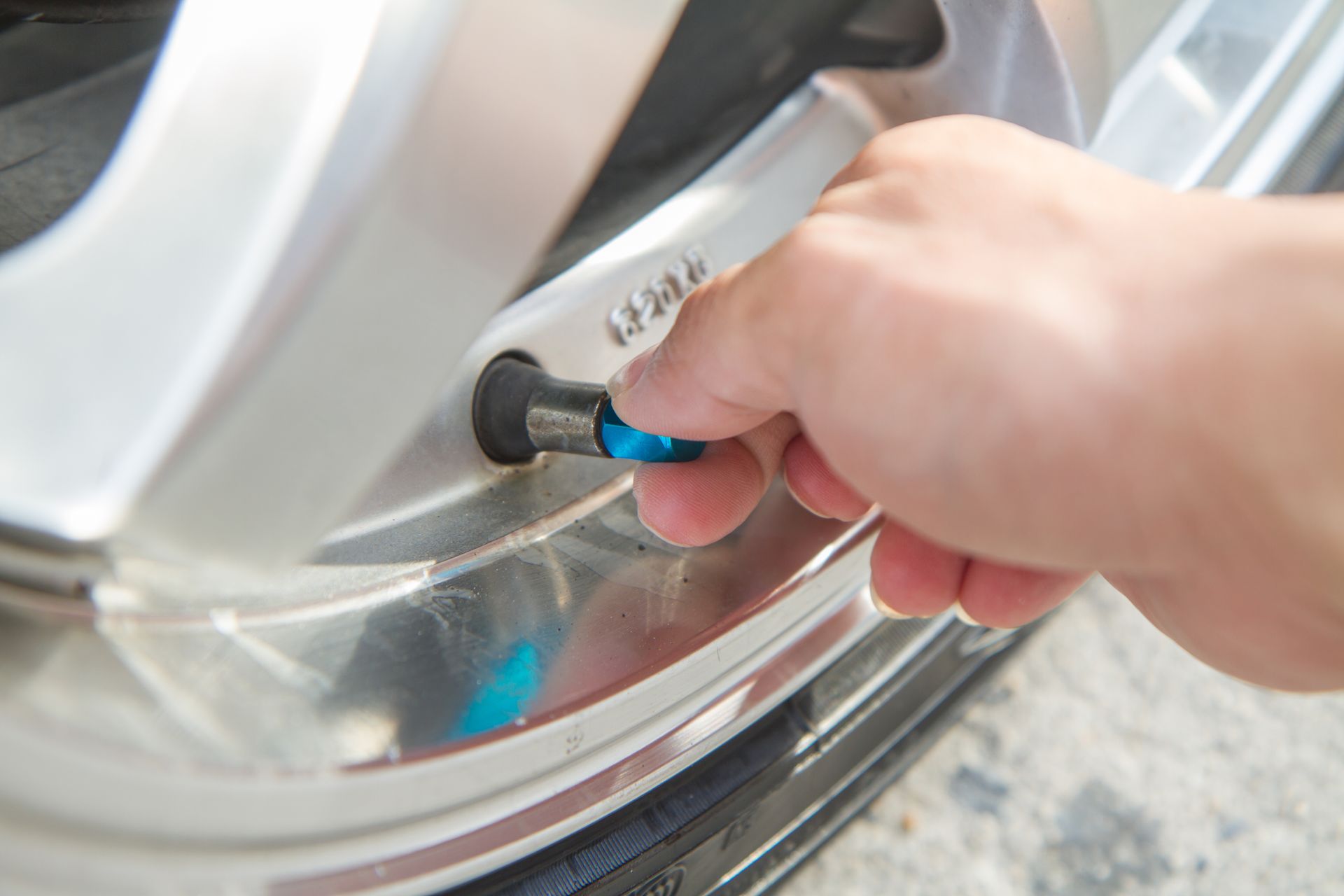
Because air expands when it's hot and contracts when it's cold, the best time to check your tires is when they are cold. The recommended tire pressure for your vehicle can be found in your owner's manual or on the door jam of the driver's door. This simple maintenance can improve your vehicle's fuel economy by 10 percent according to the EPA. Williams recommends checking your tire's air pressure & tread wear after every fill-up.

Just as important are rotating, balancing and aligning your tires on a regular basis. Most tire manufactures recommend a tire rotation every 6,000 to 8,000 miles. An out-of-balance wheel can cause tread wear, vibration, and put stress on the front-end, all potentially causing premature wear.

The wheels on your vehicle can be knocked out of alignment during daily impacts such as potholes, roadside curbing, speed bumps, or by normal daily driving. Have your alignment checked at least once per year. Should you notice the following four scenarios, Williams recommends a check-up immediately: any hard impact (accident, large pothole etc), uneven tread patterns, a difference in the handling, or a change in the steering wheel position. If you experience a change in your vehicle's handling such as a vibration while driving, a new noise, or your vehicle feels as if it is "pulling" to one side, it would be best to take it to a reputable repair shop. "A vehicle, when out of alignment, can easily cut your tire mileage in half', says Williams.

Proper maintenance of your vehicle is vital to obtaining optimum fuel economy. Regular oil changes, tune-ups as well as air filter, oxygen sensor replacement and properly performing brakes can increase your fuel economy.

Changing your driving habits can have an effect on your fuel economy. Drivers who stop making jack rabbit starts and stomping on the brake pedal will notice a change immediately.

"At Lex Brodie's, we encourage our customers to be educated about their automobiles," says Williams, "Our goal is to help our customer save time and money, while promoting increased safety. We want our customers to get the longest tire life possible, and help them save money on gas."

General Maintanence

Posted on 11/29/2012

Strut your stuff

Posted on 11/29/2012

Most motorist are practically unaware what shocks and struts do, or are unaware that they even have them on their vehicle. The fact is that without shocks and/or struts, our vehicles would be dangerous and almost impossible to drive. The shocks and/or struts on your vehicle are very vital toward your vehicles performance, comfort, and safety.

The primary duties of the shock or strut is to dampen the spring movement in your suspension and keep your tires in contact with the surface of the road. If you took all the shocks off a vehicle (on a vehicle with 4 shocks) your car would ride as if you were on a waterbed. After each bump, you vehicle would bounce until gravity stopped the movement. Vehicles equipped with struts would not be capable of moving if the struts were removed.

Your struts and shocks are that important. Worn shocks and struts affect handling, ride, stopping distance while braking, and tire wear.

How long do struts and shocks last and when should I change them?

Since struts and shocks wear out gradually, it normally goes unnoticed that one strut and/or shock has worn out. Quit often, only when the vehicles owner has changed their struts and/or shocks, do they realize how worn their struts and/or shocks were. It’s similar to the gradual, yet significant, change in your eyesight that can occur over time; you might not notice how badly you need a new eyeglass prescription until you take a vision test. We have found that original equipment (O.E.) shocks commonly wear out starting at about 50,000 miles and O.E. struts commonly wear out about 80,000 miles. Please note, struts and shocks can fail at much lower mileages and may even remain functional at much higher mileages.

There are distinguishing differences between your choices for replacement struts and shocks. After-market manufacturers of ride control products (shocks and struts) have developed products that address both handling and ride issues. Shocks and struts that are stiffer will allow the vehicle to handle better through turns and braking but will ride more harshly. Vehicles that have softer shocks and struts will give a smoother ride but may allow the vehicle to “roll” and “sway” through turns and will also dive when braking. Some manufacturers have produced a variable shock or strut, giving the driver the best of both worlds; a smooth ride when cruising and providing noticeable handling benefits when the vehicle is driven more aggressively.

Severly worn struts or shocks will allow the tire to bounce, or dribble, after hitting a bump. Worn struts and shocks will also allow your vehicle to dip forward during hard breaking, affecting both handling and braking performance. When the tire bounces or dribbles, it does not have full contact with the road and breaking distance is increased and control of the vehicle becomes difficult. The stickiest tires in the world won’t steer or stop a car if it’s in the air. Wet weather driving will also be difficult as the roads become slick from the water on the road. Worn shocks or struts will increase the chances of hydroplaning.

There is no definitive number of miles that will let you know how long your struts or shocks will last. In many cases, you will want to replace them as an Improved Performance, or a Preventative Maintenance, measure. Once your struts or shocks fail, vehicles handling can become scary, and sometimes, dangerous.

We have seen a handful of cases where vehicles (with O.E. struts) handling becomes dangerous due to strut failure on vehicles with mileage over 100,000. As your vehicles shocks or struts near the end of their useful life some things that you will notice are excessive road noise or vehicle bounce—especially over a bumpy road. You may also see unusual tire wear such as “cupping”.

A visual inspection of the strut or shock can only reveal leakage or external damage. Because the strut or shock wears on the inside, the only way to tell if it’s good or bad is a test drive, or symptoms given by the customer’s complaint. Watch to see if the front end dives excessively on sudden braking. A good gauge of your shock or struts condition is when you go over a speed bump. If the front of your vehicle continues to bounce after the front tires has cleared the speed bump then there’s a good chance your strut or shock needs replacement.

Don’t expect your vehicles ride to become smoother when you replace your struts on shocks. Worn struts and shocks actually give you a softer (but not safer) ride. Commonly customers are upset when they replace their struts or shocks and find the ride is more harsh. If you replace your struts or shocks and the ride stays the same, you either replace them too soon or used a product at the lower end of the available technology. When replacing struts, don’t over look the strut mount. The strut mount is the turn plate on the top of the strut that carries the full load of that spring. The strut plate commonly wears out consistently with the struts wear. You should always check your alignment after you replace struts and it’s strongly recommended after shock replacement.

We encourage Preventative Maintenance. As your vehicle nears 80,000-100,000 mile range; and if you plan to hold on to it for a year or more, we recommend O.E. strut and/or shock replacement as a preventative measure, and as an improved performance action.

Shocks are reasonably priced. Struts are much bulkier and replace suspension components that vehicles with shocks have, so they are noticeably pricier and require quit a bit of additional labor to replace. Backyard mechanics can, normally, easily replace their own shocks. But, untrained persons who attempt to change struts actually facelife threatening hazards in attempting such a feat.

If your well maintained vehicle is running up in mileage and you prefer keeping your beloved auto verses buying a new high priced model; strut and shocks replacement is well worth the investment. In a time where car payments frequently run $500 and up, a new car payment dwarfs the expense to keep your trusted vehicle; the one you know and trust so well, on our beautiful roads.

*Labor based on TRIAD, a national standard for replacement labor units.

Next >Last >>